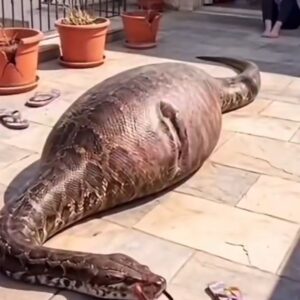
Camera perspective, lens characteristics and distance can dramatically change how large an object appears in an image.
More details and context are discussed in this article.
The Real Reason Some Objects Look Bigger in Photos
Have you ever taken a photo and noticed that something looks much larger than it did in person?
It may seem strange at first, but there’s a simple explanation. Cameras don’t see the world exactly the way our eyes do, and the position of an object within a photo can dramatically change how large it appears.
One of the biggest factors is perspective. Objects that are closer to the camera appear larger, while objects farther away look smaller. Even a small change in distance can create a surprisingly dramatic difference, especially when photographing people, buildings, food, or other objects with a wide-angle lens.
The lens itself can also play a major role. Wide-angle lenses exaggerate the difference between objects at different distances. This is why someone standing close to the camera may appear to have unusually large hands, feet, or facial features compared with the rest of their body.
The same effect can happen with everyday objects. A cup placed near the camera might look enormous compared with a plate sitting farther behind it, even though the two objects are completely normal in size.
Another factor is framing. When there are no familiar objects nearby to provide a sense of scale, our brains can easily misjudge an object’s actual size. A photograph may therefore make something ordinary appear unusually huge—or surprisingly tiny.
Lighting, camera angle, cropping, and even the shape of the background can make the illusion stronger. Put all these factors together, and a perfectly ordinary scene can suddenly look completely different from reality.
So the next time a photo makes you think, “How is that thing so big?” there may be nothing unusual about the object at all. It could simply be the camera, the lens, and the perspective working together to fool your eyes.